Corsica
American PrometheusCorsica became more than a destination in J. Robert Oppenheimer’s early life: it was the setting of a journey during which a prolonged depression began to lift, an obscure personal episode acquired lasting significance, and reading Marcel Proust’s novel left a deep impression. The island’s mountains and plateaus framed both the companions’ outward travels and Oppenheimer’s inward preoccupation. Yet what he later described as an awakening remained deliberately unexplained, so Corsica’s importance rests partly on the change he associated with it and partly on the mystery he preserved.
Setting and Journey
In mid-March 1926, three friends—Jeffries Wyman, Frederick Bernheim, and John Edsall—persuaded Oppenheimer to take a short vacation in Corsica. For ten days the four young men bicycled the length of the island, staying in small village inns or camping outdoors. The rugged terrain, craggy mountains, and lightly forested high mesas may have recalled the landscape of New Mexico to Oppenheimer. The journey placed him far from the Cambridge rooms and laboratory work that had formed the setting of his recent winter depression, although it did not instantly dispel his dark moods.
The trip offered shared exertion and conversation rather than solitude. Oppenheimer and Edsall argued as they hiked about the relative merits of Russian novelists. After a sudden thunderstorm soaked the party, they found shelter at an inn, hung their wet clothes beside a fire, and wrapped themselves in blankets. Edsall said, “Tolstoy is the writer I most enjoy.” Oppenheimer answered, “No, no, Dostoyevsky is superior,” adding that “He gets to the soul and torment of man.” The exchange linked the difficult emotional questions occupying Oppenheimer to literature, while the physical circumstances—a storm, a fire, and a shared night indoors—made the discussion part of the companions’ journey rather than an abstract debate.
Oppenheimer also gave his friends a glimpse of the kind of life he admired. Speaking about the future, he described a person who could become extraordinarily good at many things while retaining a tear-stained countenance. The remark carried the strain of his introspection, but his companions also felt that he was unburdening himself as they crossed the island. In a letter to his brother Frank, he praised Corsica as “a great place, with every virtue from wine to glaciers, and from langouste to brigantines.” The playful abundance of that description sits beside the despair his friends sometimes saw, suggesting a holiday in which pleasure and emotional difficulty were present at once.
The Poisoned-Apple Story
Near the end of the stay, a brief exchange at dinner turned the journey toward Cambridge. A waiter told Oppenheimer when the next boat for France would leave. When Wyman and Edsall asked why he needed to return ahead of schedule, Oppenheimer first refused to explain: “I can’t bear to speak of it, but I’ve got to go.” Later, after the companions had drunk more wine, he said, “I’ve done a terrible thing. I’ve put a poisoned apple on Blackett’s desk and I’ve got to go back and see what happened.” He did not elaborate. Wyman and Edsall were stunned, and neither could establish whether the account was real or imagined. Oppenheimer also told them that he had been diagnosed with dementia praecox.
The apparent timing of the confession proved misleading. Wyman and Edsall assumed that Oppenheimer had harmed Patrick Blackett that spring, perhaps out of jealousy, shortly before the trip. Later accounts instead placed the poisoned-apple incident in the autumn of 1925, during Oppenheimer’s first term at Cambridge. Francis Fergusson recalled that Oppenheimer’s father had to intervene with Cambridge authorities after the attempted poisoning. Fergusson believed the story was probably true but acknowledged that Oppenheimer had been doing “all sorts of crazy things then.” These competing recollections make the incident an important part of Corsica’s narrative without resolving exactly what happened or what Oppenheimer’s companions understood at dinner. The revelation conveyed how severely troubled he had been, but it left the friends—and later readers—without a settled account.
Reading, Love, and an Unexplained Awakening
Oppenheimer later associated Corsica with an awakening, but guarded its meaning. In response to the writer Nuel Pharr Davis, he said that the psychiatrist had been a prelude to what began on the island and insisted that it was “not a mere love affair, not a love affair at all, but love.” He described geography as the only separation he recognized, and called the experience a great and lasting part of his life. These retrospective statements attest to the significance Corsica held for him; they do not identify another person or establish that a romance occurred. The account itself emphasizes that his answer was an enigma, one he offered without disclosing a full story.
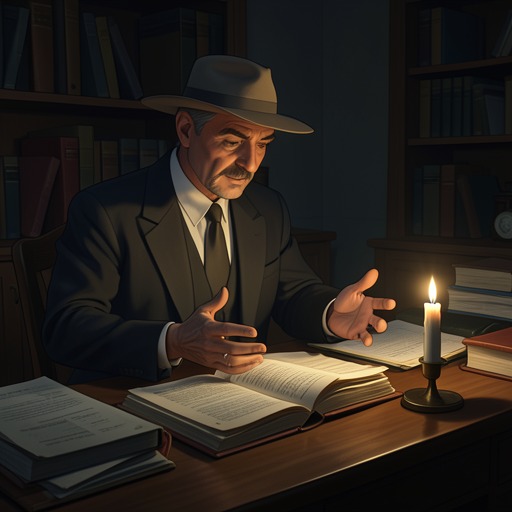
The evidence points more concretely to a book. During the walking tour, Oppenheimer read Marcel Proust’s A La Recherche du Temps Perdu by flashlight in the evenings. He later told his friend Haakon Chevalier that reading it had been one of the great experiences of his life and that it helped lift his depression. More than a decade afterward, he startled Chevalier by reciting from memory a passage in the first volume about indifference to the suffering one causes and the permanence of cruelty. The passage’s subject gives particular weight to the book’s place in his recollection: it offered language for a painful recognition about cruelty, without proving precisely what thoughts or actions had prompted that recognition.
The narrator suggests that Oppenheimer may have recognized in Proust’s words an indifference to suffering that he believed he saw in himself, and that the recognition may have eased his self-contempt. That reading is explicitly speculative, not a documented explanation from Oppenheimer. What the account establishes is narrower but still consequential: he credited Proust with a major personal effect, remembered the Corsican reading as a great experience, and later retained a passage on cruelty with striking precision. The island thus became associated not only with an unspoken experience he called love, but also with a specific act of reading that he said changed his state of mind.
Return and Lasting Significance
Oppenheimer returned to Cambridge with what he recalled as a kinder, more tolerant attitude and a greater ability to relate to others. By June 1926 he chose to end his sessions with the Cambridge psychiatrist. His circumstances there also improved when he left the room he had called a “miserable hole” for less miserable quarters beside the River Cam, halfway to the village of Grantchester. The evidence does not assign these changes to Corsica alone: the move, the decision to stop analysis, and the experience of travel are distinct parts of the spring’s transition. But Oppenheimer himself placed the island at the start of a change that he regarded as profound and enduring.
Corsica’s significance also lies in the contrast between what can be reconstructed and what remains withheld. The route, companions, ten days of cycling, storm shelter, literary arguments, flashlight reading, and hurried plan to return to France all give the journey concrete form. The poisoned apple connects it to an earlier Cambridge crisis, while Oppenheimer’s later language of love and awakening refuses to make that connection a complete explanation. The island is therefore both a real landscape in a biographical sequence and a place invested with private meaning that the account cannot fully recover. Its role is pivotal but not definitive: the depression began to lift, yet the most intimate explanation of why remained Oppenheimer’s carefully protected mystery.